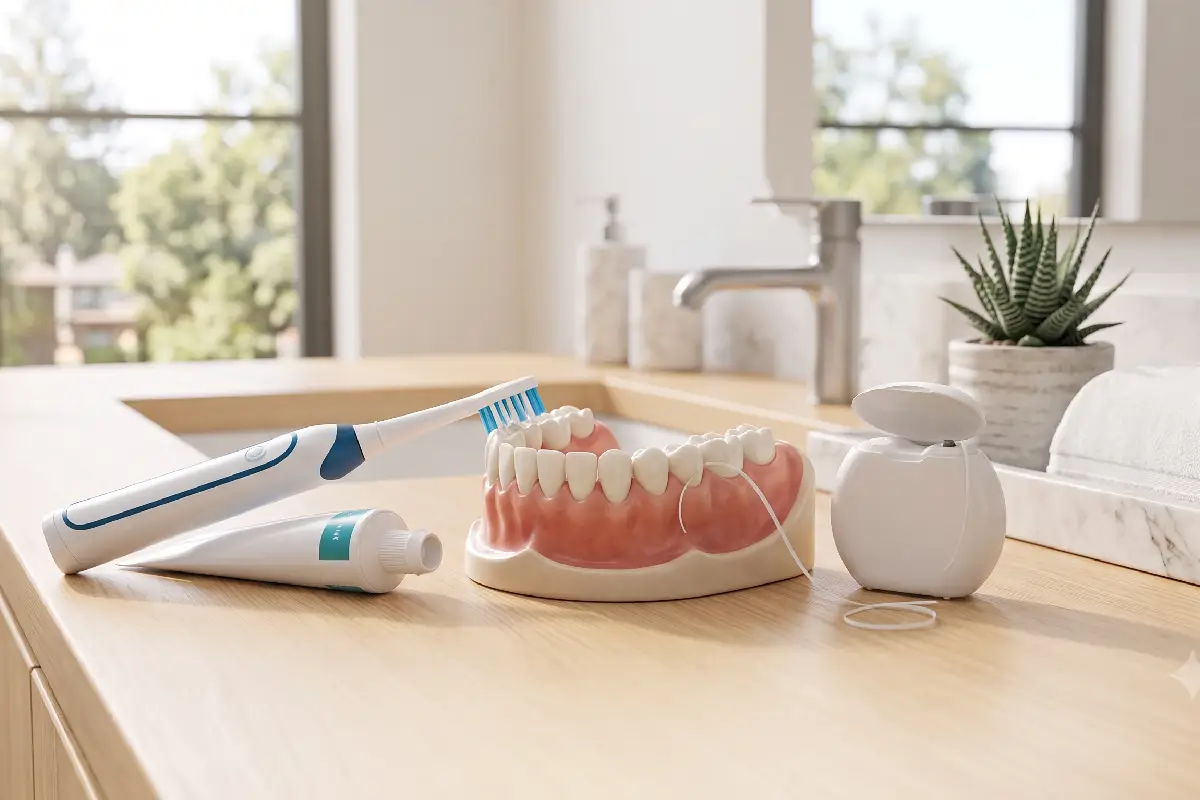
Brushing and flossing correctly each day, when performed with precise technique and the right tools, forms the cornerstone of lifelong oral health while also helping to lower the risk of systemic issues tied to chronic oral inflammation.
Yet despite how routine daily brushing has become, only about 30% of Americans floss consistently, a gap that leaves nearly 46% of U.S. adults already living with some form of gum disease.
The decisive difference lies in the details most people overlook: the precise 45-degree angle of the brush, the full two minutes of coverage across every surface, and the gentle C-shaped motion that curves floss around each tooth rather than snapping it straight through the contact point. These small refinements turn a hurried chore into a genuinely protective ritual that can spare you from painful procedures and escalating costs later. What strategic adjustments to the way you currently brush and floss might quietly transform the long-term health of your smile and your body?
Why Proper Brushing and Flossing Matter
Your mouth is home to hundreds of types of bacteria. After you eat, these bacteria feed on leftover food and sugar, producing acids that slowly eat away at your enamel. Over time, this leads to:
- Cavities — tooth decay that can require fillings, crowns, or even root canals
- Gum disease — a leading cause of adult tooth loss in the U.S.
- Bad breath — caused by bacteria hiding between teeth and along the gumline
- Systemic health issues — poor oral hygiene has been linked to heart disease, diabetes, and other serious conditions
Here is the important fact: your toothbrush alone only cleans about 60% of your tooth surfaces. The spaces between your teeth — which make up the remaining 40% — can only be reached by flossing. Skipping floss means leaving nearly half your mouth uncleaned every single day.
Step-by-Step Guide: How to Brush Your Teeth Correctly
What You Need
- A soft-bristled toothbrush (manual or electric)
- Fluoride toothpaste with the ADA (American Dental Association) Seal of Acceptance
- A 2-minute timer (most electric toothbrushes have one built in)
The Right Technique
Step 1: Hold your brush at a 45-degree angle
Place the bristles where your teeth meet your gums. Angling the brush this way allows the bristles to slide just under the gumline, where plaque loves to hide.
Step 2: Use small, gentle circular strokes
Do not scrub back and forth. Use gentle, circular motions the size of a tooth. Pressing too hard can wear down enamel and cause your gums to recede over time.
Step 3: Cover all surfaces — front, back, and chewing
Brush the outer surfaces of your upper and lower teeth, then the inner surfaces, and finally the flat chewing surfaces. Do not rush or skip sections.
Step 4: Tilt the brush vertically for front teeth
For the inner surfaces of your front teeth, hold the brush vertically and use several short up-and-down strokes to clean effectively.
Step 5: Brush your tongue
Bacteria collect on your tongue too. A gentle scrub removes bacteria and helps keep your breath fresh.
Step 6: Brush for a full 2 minutes
Most people brush for less than two minutes — the average American brushes for only 1 minute and 52 seconds. Try splitting your mouth into four sections and spending 30 seconds on each one.
Wait before you brush after meals. If you just ate or drank something acidic (coffee, orange juice, soda), wait at least 30 minutes before brushing. Acid temporarily softens enamel, and brushing right away can cause enamel erosion.
Step-by-Step Guide: How to Floss Correctly
Many people skip flossing because it feels awkward or their gums bleed. But those bleeding gums are actually a sign that you need to floss more — not less. Healthy, well-flossed gums do not bleed.
What You Need
- About 18 inches of dental floss (waxed or unwaxed both work fine)
- Or: floss picks, interdental brushes, or a water flosser if traditional floss is difficult to use
The Right Technique
Step 1: Wind the floss around your middle fingers
Break off about 18 inches of floss. Wrap most of it around one middle finger and the rest around the same finger on your other hand. This lets you unwind a fresh section of floss as you move from tooth to tooth.
Step 2: Hold it tight between your thumbs and forefingers
Use about 1–2 inches of taut floss between your fingers to work with.
Step 3: Slide — don’t snap — the floss between your teeth
Guide the floss gently between your teeth using a back-and-forth motion. Never snap or force it. Snapping the floss into your gums causes pain, bleeding, and long-term gum damage.
Step 4: Curve into a “C” shape around each tooth
When the floss reaches the gumline, curve it into a “C” shape hugging one tooth. Gently slide it just under the gumline, then scrape upward along the tooth surface. Repeat this on both sides of every gap.
Step 5: Use a fresh section for each tooth
As you move along, unwind fresh floss from one finger and wind the used portion onto the other. Using the same section of floss for multiple teeth can spread bacteria.
Step 6: Don’t forget the back molars
The back sides of your last molars are easy to skip and one of the most common spots for cavities. Make sure to floss all the way to the very last tooth on each side.
Should You Floss Before or After Brushing?
This is one of the most common questions patients ask. The short answer: floss first, then brush.
When you floss first, you loosen food particles and plaque from between your teeth. Brushing afterward sweeps all of that loosened debris away and allows fluoride from your toothpaste to reach the surfaces between your teeth for better protection.
That said, the most important thing is that you do both, every day. If you are more likely to floss after brushing, do it that way. Consistency beats order every time.
The Best Oral Hygiene Routine (Morning & Night)
Here is a simple daily routine dentists recommend:
Morning
- Rinse with mouthwash (before eating)
- Floss
- Brush for 2 minutes with fluoride toothpaste
- Do not rinse with water — let the fluoride stay on your teeth
Before Bed
- Floss (remove the day’s buildup)
- Brush for 2 minutes
- Use an antibacterial mouthwash (optional but helpful)
Pro tip: Nighttime oral care is the most important. Your saliva production drops while you sleep, making it easier for bacteria to cause damage. Never skip brushing before bed.
Choosing the Right Tools
Toothbrush
- Always choose soft bristles. Medium or hard bristles damage enamel and irritate gums.
- Electric toothbrushes remove more plaque than manual ones because of their higher stroke rate. Harvard Health recommends electric brushes, especially for people who tend to press too hard.
- Replace your toothbrush every 3–4 months — or sooner if the bristles look frayed. A worn-out brush cleans poorly and can harbor bacteria.
Toothpaste
- Use a fluoride toothpaste with the ADA Seal of Acceptance.
- Sensitive teeth? Look for toothpaste with potassium nitrate or stannous fluoride.
- Avoid whitening toothpastes with harsh abrasives unless your dentist recommends them.
Floss Options
- Traditional string floss — the gold standard for most people
- Floss picks / Y-shaped flossers — great for on-the-go or for beginners
- Interdental brushes — small brushes that fit between teeth; highly effective and gentler on gums
- Water flossers (Waterpik) — excellent for people with braces, bridges, implants, or arthritis; helpful but should complement, not replace, traditional floss
7 Common Brushing and Flossing Mistakes to Avoid
- Brushing too hard — erodes enamel and causes gum recession
- Not brushing long enough — most people brush under 2 minutes
- Snapping floss into gums — causes pain, bleeding, and gum damage over time
- Skipping the gumline — this is exactly where plaque and bacteria build up
- Using an old toothbrush — worn bristles clean poorly and spread bacteria
- Brushing right after eating acidic foods — wait at least 30 minutes
- Rinsing with water immediately after brushing — this washes away the protective fluoride
Special Situations: Kids, Braces, and Seniors
Children
Start flossing as soon as two teeth touch, which can happen as young as age 2–3. Adults should help children floss until around age 10–11, when they develop the coordination to do it themselves. Use a child-sized toothbrush and a rice-grain-sized amount of fluoride toothpaste for children under 3, and a pea-sized amount for ages 3–6.
Braces Wearers
Traditional flossing is harder with braces but still essential. Use a floss threader to guide floss under the wire, or invest in a water flosser, which makes reaching around brackets much easier. Interdental brushes also help clean around brackets.
Seniors and People with Dexterity Challenges
Arthritis or limited hand mobility can make flossing difficult. An electric toothbrush and a water flosser are especially helpful. Your dentist at Stone Creek Village Dentistry can recommend the right tools for your situation.
When to See a Dentist
Even the best home care routine cannot replace professional cleanings. Tartar — hardened plaque — cannot be removed by brushing or flossing once it forms. Only a dental professional can clean it away.
See your dentist regularly even if your teeth feel fine. Many dental problems, including early-stage gum disease and cavities, cause no pain at first. By the time something hurts, the issue has often become much more serious and expensive to treat.
Schedule a dental visit if you notice:
- Gums that bleed frequently and do not improve with regular flossing
- Persistent bad breath
- Tooth sensitivity to hot or cold
- Pain when chewing
- Visible changes in your gums (swelling, receding, or color changes)
- A visible hole or dark spot on a tooth
Your Local Dental Partner in Del Rey Oaks, CA
At Stone Creek Village Dentistry, we believe that great oral health starts at home — but it is built in partnership with your dental team. Our patients in Del Rey Oaks and the Monterey Peninsula trust us for:
- Preventive cleanings and exams to catch problems early
- Personalized hygiene coaching so you know exactly what to do at home
- Family-friendly care for patients of all ages
- Gentle, compassionate dentistry in a comfortable setting
We know that life gets busy, and habits can slip. That is exactly why we are here — to help you get back on track and keep your smile healthy for life.
The Bottom Line
Brushing and flossing correctly is the single most powerful thing you can do to protect your teeth and gums every day. The key takeaways:
- Brush twice daily for 2 full minutes with a soft-bristled brush at a 45-degree angle
- Floss at least once a day using the C-shape technique — gently, not forcefully
- Floss before brushing for maximum fluoride benefit
- Replace your toothbrush every 3–4 months
- See your dentist twice a year for cleanings and exams
Your smile is worth a few extra minutes each day. And when you are ready for professional support, the team at Stone Creek Village Dentistry is right here in Del Rey Oaks to help.
Schedule Your Cleaning Today | (831) 920-6900
This article is for educational purposes only and is not a substitute for professional dental advice. Please consult your dentist for personalized guidance based on your oral health needs.